
The Silent Witness: How Forensic Science Powers Criminal Justice
Forensic science serves as the vital bridge between the laboratory and the courtroom. By applying rigorous scientific methods to legal investigations, it transforms physical traces into objective evidence. This blog explores how forensic disciplines—from DNA analysis to digital forensics—integrate with criminal law systems (including India’s new 2024 statutes) to ensure justice is served through proof beyond a reasonable doubt.
The Intersection of Science and the Gavel
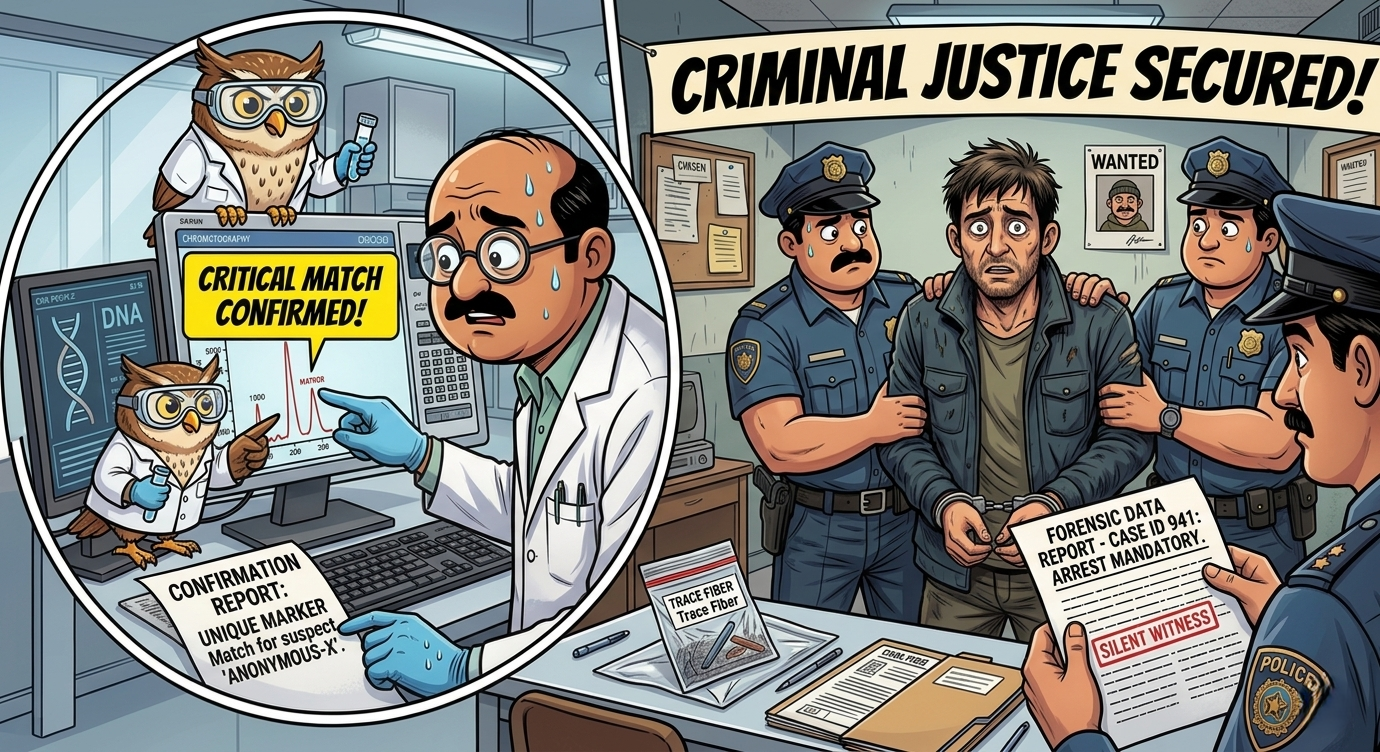
Forensic science is more than just a plot point in a crime drama; it is the application of scientific techniques to examine evidence for legal proceedings. Its primary goal is to provide objective findings that can assist in identifying suspects, solving cold cases, and, crucially, exonerating those who are wrongfully accused.
The Core Disciplines of Discovery
To cover the vast spectrum of modern crime, forensic science branches into several specialized fields:
Forensic Biology & DNA: Mapping the unique genetic blueprints left at a scene.
Toxicology: Identifying poisons, drugs, or chemicals within a system.
Ballistics: Analyzing firearms and ammunition paths.
Digital Forensics: Recovering data from the digital shadows of phones and computers.
Forensic Anthropology: Studying skeletal remains to determine identity and cause of death.
The Forensic Investigation Process
A successful investigation follows a strict protocol to ensure that evidence is not only scientifically sound but also legally admissible.
Scene Investigation: Securely collecting and documenting evidence while maintaining a strict chain of custody.
Laboratory Analysis: Using advanced technology to determine the relevance of physical traces to the crime.
Expert Testimony: Forensic scientists take the stand to translate complex data into understandable facts for a judge or jury.
Locard’s Exchange Principle: The foundational rule of forensics. It states that "every contact leaves a trace." A criminal will always bring something to the scene and leave with something from it.
The Legal Framework: Criminal Law
While forensics provides the "how," criminal law provides the "why" and the "what next." Criminal law is a system designed to punish acts against public safety and order. Unlike civil law, the state prosecutes the accused, and the burden of proof lies heavily on the prosecution to prove guilt beyond a reasonable doubt.
Essential Elements of a Crime
For an act to be punishable, it generally requires two components:
Actus Reus: The physical "guilty act."
Mens Rea: The "guilty mind" or criminal intent.
Modern Updates: Criminal Law in India (2024)
The landscape of justice is constantly evolving. As of July 1, 2024, India transitioned from its colonial-era laws to a new, modernized framework:
Old Law:
Indian Penal Code (IPC)
Criminal Procedure Code(CrPC)
Indian Evidence Act (IEA)
New Statue (2024)
Bhartiya Nyaya Sanhita(BNS)
Bhartiya Nagrik Suraksha Sanhita(BNSS)
Bhartiya Sakshya Adhiniyam (BSA)
Role
Substantive Law (Definitions of crimes)
Procedural Law (How trials are run)
Evidence Law (What can be used in court)
Subscribe to our upcoming Forensic Law workshop.
Enjoy exclusive special deals available only to our subscribers.

Request Information on Legal Procedures
Info@Legumowls.com, Legumowls@gmail.com